I am confused by this book. I am less confused by this book after I did some research and found out that it's the first book of a series. Excellent.
So I was fooling around on twitter one day (as I am wont to do) and I saw that there was a giveaway from Razorbill - it's absolutely no secret I've been on a YA book kick for the past few months (can't help it, what's coming out is awesome) and they were doing a giveaway for some new titles. I did what I always do, googled for the plot, begged for the book, got nostalgic over a past job a Razorbill author and I shared, won the book and then got worried because I really really wanted to love the book, and that tends to end poorly for me.
It's also no secret I tend to buy books for their covers. I know, I know, but I do. I not only really dug the cover, but I loved the title. I'm Newfie enough it was one of the phrases I remember hearing from my Grandpa fairly constantly and quite simply, I really wanted to be charmed by this book.
Whelp (yes I went there) stars aligned and I was completely charmed by this book. Violet is charming, River is sufficiently dark and mysterious to make the teens and tweens smitten and even I half love him when I know I shouldn't. The character development is haunting - generally the novel is. I'm about to get really folky here guys - but the magic in this book is magical because it's not actual magic. It's the magic any of us raised by people who were raised with myth and legend can identify with - the local folk magic that's in what we wear, the shadows by our bed and the fact that we remember why you leave fairy bread out by the window. Tucholke manages to make the book creepy, disturbing and really you should probably read it with the lights on.
I'm not going to get overly into it because it doesn't come out till August, but it's well worth reminding yourself to pick up a copy.
Showing posts with label young adult. Show all posts
Tuesday, March 12, 2013
Tuesday, February 19, 2013
RUSH
So I wasn't sold on this book from day 1. The premise is the main character is pulled from her real life, into what appears to be a real life video game, where she has to eliminate an alien life form. Basically, kind of Hunger Games meets Books of Valor - so I was half sold, but half leery because this will either end fantastically, or in a slightly painful tug of war.So the thing is Silver pulls it off. RUSH is a lot of fun - Miki is clueless, frustrated and terrified because there are aliens and what is going on because guys, aliens, but if you die in the game, you die in real life. Her teammates try and fill her in, but when she goes back to real life (I'm old, so I kept having Matrix flashbacks) she tries to find out what's going on but that's harder than she expected. Miki is a pretty great character - she knows how to fight and despite her being confused she picks up quickly - strong young female characters I'm generally a fan of, especially when authors don't fall into cliche's. I will say that this is the first of a series, and does end with a cliffhanger. We've discussed that this drives me insane. I get why authors do it, I think they have to do it, but you know. Insane.
I think generally this is a book that teens can grab on to - first person shooter games, anime, MMO are all aspects that will grab the reader's interest. The originality of the book is also a draw - I certainly haven't read a book with a similar plot and I read a lot. I've recently been on a young adult specific book kick, and this one's plot stuck out (in a good way) when it comes to originality. I liked it because the book started out a bit slow, but that makes sense because the reader grows and learns with Miki - the pacing actually ended up being fantastic. I would basically throw this book at any teenage reader - it's a refreshing change from the outright supernatural (even though I admittedly do love the supernatural).
**I recieved an ARC copy at OLA Super Conference.
Friday, January 25, 2013
Archon
So it straight up kills me to write this review. I'd been glancing at this book on the shelves of the bookstore for months. The cover is gorgeous, the summary hooked me from the first time I read it and the ideas Benulis puts forward are ones that hit every point in something I would usually love to read. The first third of the books straight up confused me - the protagonist Angela dreams of Angels and no matter how hard she tries can't die. She's a Blood head which is a read head who is possibly a witch, and also possibly "the Ruin" who is the vessel for a dead Angel come back to life. The above two aspects firmly bring to mind Constantine and Supernatural to me, and both of those pre-dispose me to like this book.
So help me I couldn't, and I tried. I tried SO HARD to like this book. The characters weren't overly likeable to me and I ended up really wishing that there was going to be some sort of thematic shift where the bad guys were actually the good guys because the Djinn's and Deamons were fantastic. So the thing about the mythology behind the book is that I have 0 expectation of angels being noble - but there was a bit too much of a glaring gap between the angels/demon nobility gap for me to get behind. Angela is fairly emotionally flat, and it makes it a little hard to get behind her as a heroine. Her history was touched on, but it's an awkward mix of either too much or too little background to give you an understanding of her.
The awkward part for me is that even though I was pretty thrown by the fact that even though I really disliked the book, I really did like Benulis as a writer - she tends heavily towards a Gothic feel, and I have absolutely no issue with it because she does it well. The middle of the book is really interesting, and as much as I hate to say it I wonder if the book being the first of a series, or maybe having too heavy of a copy edit had something to do with the beginning and the end feeling and reading almost like they were two different books. That also being said, I think the editor needed to take a bit of a heavier hand so, take that for what you will. I will also say it's clear Benulis has an excellent imagination, and the subtlety and I did like that she didn't make romance a big part of the plot. So well done there. But the fact is the book seemed unnecessarily complex, in a way that didn't add anything to it. Another reviewer said it best - the setting outshines the characters - the back story to that would be fascinating.
Sunday, November 25, 2012
The Winter Witch
So here's the thing about Goodreads Giveaways. I don't enter all of them - I have this ridiculous mindset that if I enter to win ALL THE BOOKS by some twist of fate I'll only win the ones I don't really want to read. So I did legitimately want to read this book. I've been (really) meaning to read Paula Brackston's The Witch's Daughter for years and I keep getting distracted. So when I saw The Winter Witch I was excited because hey, distract myself with a book I've literally been meaning to read for years with a new one by the same author.
This book hits a lot of boxes for me - Historical Fiction, specifically Celtic History, Fantasy, Magic, Witches and more importantly, latent Witches. A part of life that anyone from that culture gets. It's also a YA book, and recently I'm loving them - part work related, part they're just plain good. I love the 500 Kingdom's books, and it wasn't until after I read them I found out they were a) YA books and b) put out by Harlequins' teen branch. I've touched on this before. Still baffled. Either way, so YA books. I like them.
So here's the good - I read a lot of Historical Fiction, I got my undergrad degree in it so I have a general at least latent knowledge of history and I like it. The book was spot on for where a historical fiction book should be - it was written in a way that didn't make it seem like Brackston was throwing in historical facts just because, the details were woven in beautifully and as a HF book, it was very well done. Morgana was a lovely character, with depth and excellent character development. Cai was also well done and gave a fascinating prospective. The writing itself was also generally solid, and it was a very readable book.
The less good is that I actually didn't love the book. The characters other than Morgana and Cai were slightly on dimensional and it felt like some of the details were a bit thrown together. I delayed writing this review because I wasn't entirely sure why the book didn't grip me and I think it's because (this kills me to say because I hate trilogies) but I kind of wonder if this should have been book one of a trilogy. Brackckston is clearly a fantastic writer, with creative lovely ideas and fantasic plots. I think if there had been a bit more character development for the other characters, and a little more time given to the ending it would have been an amazing read.
*** I was sent this book by the publisher - all opinions are my own.
Wednesday, November 7, 2012
Frozen
I heard about this book a while ago, and have meant to grab a copy for a while. I don't know what took me so long (I know, a month after publication. Slacker.). The premise sounded fabulous - based on the true story of a dead prostitute's frozen body found propped up at city hall when suffrage was in it's height, Casanova chose to tell the story through a fictional 16 year old daughter. The basic premise is that 16 year old Sadie Rose lost the ability to speak after her mother died 11 years ago. She was taken in by a senator, and Sadie feels pressure to be who they want her to be, even if she isn't quite sure who she is. When she finds pictures of her mother, it unlocks memories and helps her find her voice. That's as much summary as you get, because other better people write other better summaries.
The thing about this book is that I found it... pensive. That's almost the right word, but maybe quiet works better? It's not an action packed book, full of adventure and unpredictability, it's a coming of age story that more slowly takes you on a journey. But that's also not right because that makes the book sound boring, and it isn't. Casanova does a great job with the historical setting and the resulting social details - Google tells me Casanova wrote for American girls and I find that not at all surprising. Clearly historical fiction is an area she enjoys writing about. Frankly, that's one of the problems - I wonder if Casanova is writing a touch out of her comfort zone in terms of age bracket, because the plot at times is a bit awkward, and some of the secondary characters are a little too shallow. That being said, Sadie Rose is a great character, pitched pretty spot on to her 13-17 age range (though I admittedly would lean more to 12-15 age range for recommendations, personally).
Casanova is generally a fantastic writer - the book is beautifully written and the premise is solid. I liked this book, I just didn't love it. But that's not a bad thing, because I will 100% suggest this book to some of the teens at my library. I think younger readers will find something very appealing about Sadie's rather rapid transformation - the identifiable nature of feeling the need to figure out who you are. All this being said, it was a quick read and an enjoyable one.
*** Review is based on an advance copy from NetGalley. Blah Blah this didn't affect my review. Promise.
Friday, November 2, 2012
Scent of Magic
So it's no real secret I like Maria V. Snyder. I blogged about her here and here and Scent of Magic didn't disappoint. I've said it before, and I'll say it again too: I'm constantly shocked and admittedly a lot impressed with what Harlequin MIRA and Harlequin LNA are putting out on the market (no, they didn't pay me to say that. Actually I'm pretty sure they would pay me not to say that). I remember after reading the 500 Kingdom's books by Mercedes Lackey I was baffled that they were put out by Harlequin - so bravo Harlequin. You should hire me to be a librarian, or something. So all that being said, Snyder is great, and her books are solid. Generally.
More specifically this is a great part 2 of the trilogy - character building is solid, there are the expected twists and turns and it's all in all a fun read. I really like where Snyder is taking the book - the whole Death Lily/Life Lily is a really interesting discussion point that it's entirely possible I'm reading too much into. Snyder's writing doesn't fall into the romance trap - a lot of the book is spent with the two main love interests apart from each other, and while Snyder carefully keeps them thinking of each other, they aren't wrapped up in a (usually tiring) "missing" of the other one. I was admittedly a touch annoyed at the alternating between Avry and Kerrick in the first and third person points of view - and that each portion ends with a cliffhanger gets to be a little overdone. That being said, the adventure is exciting, and arguably most important the plot is plausible and realistic. Blah blah blah it's fantasy-ish, but Snyder builds her books on a realistic fantasy. Is that a thing? My review, so yes. Yes it is.
As a bit of an aside, I think one of the things I like most about Snyder's writing is the attention she pays to the secondary characters - she really builds a world and it's clear she focus' on each character in a way that shows a lot of thought to their growth, change, and adaptability.
Overall thoughts: I really enjoy Snyder's writing, characters and plot development and this is pretty much exactly how I personally think a teen/YA romance/adventure book should be written. The cliffhangers? They were a bit much by the end.
*** Review is based on an advance copy from NetGalley. Blah Blah this didn't affect my review. Promise.
More specifically this is a great part 2 of the trilogy - character building is solid, there are the expected twists and turns and it's all in all a fun read. I really like where Snyder is taking the book - the whole Death Lily/Life Lily is a really interesting discussion point that it's entirely possible I'm reading too much into. Snyder's writing doesn't fall into the romance trap - a lot of the book is spent with the two main love interests apart from each other, and while Snyder carefully keeps them thinking of each other, they aren't wrapped up in a (usually tiring) "missing" of the other one. I was admittedly a touch annoyed at the alternating between Avry and Kerrick in the first and third person points of view - and that each portion ends with a cliffhanger gets to be a little overdone. That being said, the adventure is exciting, and arguably most important the plot is plausible and realistic. Blah blah blah it's fantasy-ish, but Snyder builds her books on a realistic fantasy. Is that a thing? My review, so yes. Yes it is.As a bit of an aside, I think one of the things I like most about Snyder's writing is the attention she pays to the secondary characters - she really builds a world and it's clear she focus' on each character in a way that shows a lot of thought to their growth, change, and adaptability.
Overall thoughts: I really enjoy Snyder's writing, characters and plot development and this is pretty much exactly how I personally think a teen/YA romance/adventure book should be written. The cliffhangers? They were a bit much by the end.
*** Review is based on an advance copy from NetGalley. Blah Blah this didn't affect my review. Promise.
Tuesday, October 23, 2012
Touch of Power
So I generally hate reading the first book of a trilogy - something about how I finish and want to keep reading. Instant gratification at its best/worst. The thing is I really really do like Maria V. Snyder. I couldn't put down Study series, it was fantastic and I really wanted something that was an easy read, but not a boring read (and I mean this in the best possible way). Snyder reminds me a lot of Tamora Price - strong characters, solid plotlines, great pacing and romance that doesn't make you roll your eyes and go "Really?"All that held pretty true to form for this book. For lack of a better term this is a lovely book. There are twists and turns and adventure and while there are a few gaps in the flow of some background information, I'm pretty sure that will come out in the next two off the series. There's also a lovely bit of whimsy - human eating plants make a surprisingly fantastic plot point. Who knew? Generally it's just a very very readable story - I'm sparing you the summary because it's *everywhere*. So here's the deal. I'm a librarian. I was turned onto Snyder by someone who works at a bookstore. So it's not that I know everything, or even that she and I know everything. But what we DO know is books. With exceptions for personal tastes, two people who know books say go read this writer. I *personally* liked her Study series a bit more, but that being said I read the whole Study series, and not just the first book.
So go, read it. Trust me, I'm a librarian.
Wednesday, August 15, 2012
OZ
As a follow-up to my last review on Mary Poppins, the OZ series is another series that had a huge impact on my love of reading growing up. The thing is (and this is a little embarrassing) (also, embarrassing that it's embarrassing) I didn't actually read The Wonderful Wizard of Oz until a few years ago. I saw the movie when I was a kid (who didn't?) and my mom read a few books of the series to me when I was a kid. At the same bookstore (which by the by sadly closed down and is no longer) and as a post-Mary Poppins recovery, I picked up The Marvelous Land of Oz. So here's the deal. There were 14 books about Oz, and Dorothy is not a central character in all of them. Ozma of Oz doesn't even mostly take place in Oz - same goes for Dorothy and the Wizard in Oz, The Road to Oz is on the way to Oz... and so on. Baum builds an entire world - where Dorothy is a Princess of Oz, Santa shows up with Billina the Yellow Hen and the Gnome King tries to take over. It's a fabulous series - do yourself a favour and pick it up - It's good for almost any age.I have read the entire series, over several years. It's surprisingly (or I guess not) hard to find every book in the series. I think there are over 50 books in the series when all is said and done. Finding the original 14 can be hard enough, but trying to hit every book in the series can be a challenge I admittedly haven't been able to complete. But you should try.
Sunday, August 12, 2012
Mary Poppins
I've always been a reader. I really was one of those kids who would read under the blankets, with a flashlight, and my Mom tells me how she would pretend not to notice because she couldn't handle stopping me from reading. I grew up reading the "classics" - Pocahontas, Bambi, Robin Hood, Little House, Mary Poppins and the Wizard of Oz. We moved to Toronto when I was in grade 6, and just up the street from us was an amazing kids book store. I was admittedly a bit lonely and intimidated and Mom knew I needed a distraction, so, off to the bookstore we went. This sounds a little cliched, but I didn't know where to start. The woman there asked me I had read Mary Poppins. With the scorn only an 12 year old can give I her of course I did. She then asked me if I had read the entire series. I have no clue it was a series, and over the next few weeks I picked up the entire series.
The Mary Poppins series wasn't life changing, but it is a series that stuck with me, right up there with the OZ, Little House and The Immortals - all of which I read at about the same time. I loved Mary Poppins because it made magic real. My favourite of the series is Mary Poppins Opens the Door - the book that first taught me that cats can look upon kings. The thing is, as a review this one is going to be slightly lackluster because the thing is, I can't help but to wax slightly poetic about this series. The book series is not the film version - I can't emphasize that enough. There are obvious similarities but in the books Mary is vain and crabby and a bit of a mystic. There's no way to say it other than bizarre things happen when she is around but the real thing that comes out in the series is that Mary has a heart of gold and depths that the movie can in no way come near touching.
Having read the series as a pre-teen, and then again as an adult what rings true is that the whole series is about the magic of childhood. It's just plain fun to read - as Mary herself says “Don't you know that everybody's got a Fairyland of their own?”
Wednesday, August 8, 2012
The Templeton Twins Have an Idea
I recieved this book through the Goodreads First Reads giveaway. I wasn't quite sure what to make of it when I first got it. The overly self aware narrator kind of sounds like my internal voice when I let my internal voice get away from me but moving right along. The first book of a new series that is about the Templeton Twins and is sort of a graphic novel but not really, a mystery with buzzles and admittedly pretty fabulous questions for review at the end of every chapter that poke fun at the directed reading/tests that are pretty common place for the targeted age group. Holmes' illustrations are fabulous - drawings, sketches, diagrams, flow charts make a fabulous addition to the book. It was reminiscent of A Series of Unfortunate Events to me - the author explains words and turns of phrases to the reader which makes it a very accessible book.This book is in the details to me. The blue hue to it gives it a blue-printy feeling which I loved. I'm about 98% certain that the target age will be all over this book - the humour is accessible and clever, the characters are endearing and make you want to get to know them (I kind of love the over the top personalities) (especially the narrator) and it's got enough mystery and adventure to be a pretty solid read for whoever reads it. Including a parent, if they so chose, or are reading it on their own. It's a fun read.
All the above being said, I gave my copy to an 11 & a 12 year old. Clearly I'll bow to their superior opinions regarding it when I hear what they said.
Wednesday, February 29, 2012
I found that I find the things that you find important rather peculiar
I'm the first to admit that I think YA fiction is wonderful. No, really. I read it surprisingly often, and so do most of the people I know. Granted, a lot of those people are librarians, but not all of them are and that's what's important. To be 100% clear I am not talking about Twilight. My dirty librarian secret is that I've never actually read Twilight. Don't get me wrong, I have my own Super Secret Guilty Reading Pleasures (and there's more where that list comes from), but YA isn't one of them. I'll also be the first to admit that sometimes I'm surprised to figure out that a book I'm reading is in fact YA fiction. More to the point, something I think about more and more as I feel more and more drawn to children's and youth librarianship/literacy is what books to recommend to teens and pre-teens when they ask for something "like (or not like) Twilight."
It's the age old question of what is appropriate to recommend, what is appropriate to recommend for different groups... it's a hard line to figure out. Book series I read when I was in the 13-19 year old stage were pretty varied, and ranged from Tamora Pierce to Tanya Huff to Anne Bishop (who even though I read it, I would hesitate to recommend to someone who was as old as I was when I read it). I was lucky when I was a teen - my mom was a voracious reader, and she encouraged me to read anything and everything. I read Rohinton Mistry, Michael Ondaatje, most of the classics and pretty much anything I could get my hands on. The thing is, when I was working with youth for Now Hear This)) I noticed that a surprising amount of parents were pretty conservative when it came to what they thought their kids should, and could be reading. Books my not only my mom, but my fairly conservative private school had no issue encouraging us to read were books that the schools and parents I was working with found "questionable." We dealt with it on a case by case basis, one of my main objectives was to discuss with the parents and schools why they found the books "questionable" and explained to them why I thought they weren't. Since I never actually stopped reading YA fiction, both for work and pleasure, I felt (and feel) pretty confident in suggesting the following series to most teens, and most parents of teens!
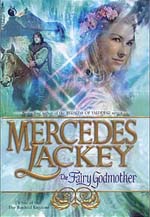
Mercedes Lackey's 500 Kingdoms is one of those series. I grabbed it off the adult fantasy shelf at Chapters, and it wasn't until my roommate and I were joking we should write or edit Harlequin Romance novels to pay our way through grad school that I realized not only is this series technically a Harlequin Romance novel, but the first book off their Luna young adult label. It never occurred to me (or my roommate) that this was the case. In related news, this is a fabulous series and you should go read it. I have lent it to everyone ranging from a 17 year old girl to a 32 year old guy, and not only did neither of them realize it was a romance novel, but they both loved it so much they went out and bought their own copies of the entire series.

A friend of mine in real life introduced me to a friend of hers from Twitter who I met randomly at a TFC game then ran into at the Chapters she managed recommended the next series to me (yup. That's important.). I was hemming and hawing in the Fantasy section (over if I was going to read Patricia Briggs, something I've already discussed my being ridiculous about) and flipped out when she found out I hadn't read the Study series by Maria V. Snyder. In fairness, she was 100% right. It's a fabulously written YA series (that oh, hey, also in the adult fantasy section of Chapters). It's a series I can get behind recommending to anyone - it's historical(ish) with a little bit of... almost steampunk-ishbutnotreally with a kind of sci-fi-ish element. Tough to explain, but very much worth the read. Very very much.
This being said, I really do think there are a ton of books that are really YA friendly - and I'm not talking the (obvious) Tamora Pierce and Patricia C. Wrede books. Bedknobs and Broomsticks is a fabulous book, so is the entire OZ series (it's quite long, and quite wonderful). Percy Jackson I personally love, but then, it's Greek mythology, so no-brainer. Harry Potter is the old stand-by (do I date myself when I say that one of the worst work experiences I had was when I was working at an Arts Camp, I remember Harry Potter coming out and we had to stop the kids from reading so they could do crafts and play sports. It was awful, and we all felt terrible). Last (but nowhere least) the Bartimaeus trilogy is also fantastic. I tend to lean towards series when I'm recommending YA books - I find most of the readers like building a... friendship? with the characters. By readers, to be clear, I'm including myself!
It's the age old question of what is appropriate to recommend, what is appropriate to recommend for different groups... it's a hard line to figure out. Book series I read when I was in the 13-19 year old stage were pretty varied, and ranged from Tamora Pierce to Tanya Huff to Anne Bishop (who even though I read it, I would hesitate to recommend to someone who was as old as I was when I read it). I was lucky when I was a teen - my mom was a voracious reader, and she encouraged me to read anything and everything. I read Rohinton Mistry, Michael Ondaatje, most of the classics and pretty much anything I could get my hands on. The thing is, when I was working with youth for Now Hear This)) I noticed that a surprising amount of parents were pretty conservative when it came to what they thought their kids should, and could be reading. Books my not only my mom, but my fairly conservative private school had no issue encouraging us to read were books that the schools and parents I was working with found "questionable." We dealt with it on a case by case basis, one of my main objectives was to discuss with the parents and schools why they found the books "questionable" and explained to them why I thought they weren't. Since I never actually stopped reading YA fiction, both for work and pleasure, I felt (and feel) pretty confident in suggesting the following series to most teens, and most parents of teens!
Mercedes Lackey's 500 Kingdoms is one of those series. I grabbed it off the adult fantasy shelf at Chapters, and it wasn't until my roommate and I were joking we should write or edit Harlequin Romance novels to pay our way through grad school that I realized not only is this series technically a Harlequin Romance novel, but the first book off their Luna young adult label. It never occurred to me (or my roommate) that this was the case. In related news, this is a fabulous series and you should go read it. I have lent it to everyone ranging from a 17 year old girl to a 32 year old guy, and not only did neither of them realize it was a romance novel, but they both loved it so much they went out and bought their own copies of the entire series.
A friend of mine in real life introduced me to a friend of hers from Twitter who I met randomly at a TFC game then ran into at the Chapters she managed recommended the next series to me (yup. That's important.). I was hemming and hawing in the Fantasy section (over if I was going to read Patricia Briggs, something I've already discussed my being ridiculous about) and flipped out when she found out I hadn't read the Study series by Maria V. Snyder. In fairness, she was 100% right. It's a fabulously written YA series (that oh, hey, also in the adult fantasy section of Chapters). It's a series I can get behind recommending to anyone - it's historical(ish) with a little bit of... almost steampunk-ishbutnotreally with a kind of sci-fi-ish element. Tough to explain, but very much worth the read. Very very much.
This being said, I really do think there are a ton of books that are really YA friendly - and I'm not talking the (obvious) Tamora Pierce and Patricia C. Wrede books. Bedknobs and Broomsticks is a fabulous book, so is the entire OZ series (it's quite long, and quite wonderful). Percy Jackson I personally love, but then, it's Greek mythology, so no-brainer. Harry Potter is the old stand-by (do I date myself when I say that one of the worst work experiences I had was when I was working at an Arts Camp, I remember Harry Potter coming out and we had to stop the kids from reading so they could do crafts and play sports. It was awful, and we all felt terrible). Last (but nowhere least) the Bartimaeus trilogy is also fantastic. I tend to lean towards series when I'm recommending YA books - I find most of the readers like building a... friendship? with the characters. By readers, to be clear, I'm including myself!
Monday, February 27, 2012
Elle Me dit
If you look back (wayyyy back) to when I first started this blog it`s pretty clear I didn`t have a focus to it. I posted it kind of like my version of a memory book- I wrote recipes (which I`m tossing around posting again), pictures of where I went (I used to do way more apparently) and as a journal to the process of library school there in the end. What I didn`t talk about it seems, is what I was doing for a living. Who knows why, because at the time what I was doing was actually pretty fun. I was working in not-for-profit and I was fortunate enough to work with a pretty varied group of organizations doing everything from running Toronto Buskerfest to my personal favourite, Now Hear This)).
Now Hear This)) is a youth literacy project based out of Toronto and works mainly with the Catholic School Board (though when I was there we did private workshops, and worked with the TDSB as well) and had the purpose of bringing accessible literacy to the classroom. It`s a fabulous program - in the main program, SWAT (Students, Writers and Teachers), writers come into the classroom for about half a semester and teach students part of their English curriculum. As the site says "These workshops help develop literacy skills, cultivate talent and creativity, encourage self-expression and foster analytical and critical thought. Writers and teachers develop writing exercises together that complement course curricula and engage students in material they might otherwise find difficult and alienating."

Now Hear This)) is where my passion for literacy comes from - I believe so strongly that all people need for literacy is a chance. It's a fabulous program - I saw student after student who said they "hated to read" or "found books and writing boring" take a shift to the complete opposite direction, and, after the program was completed write, submit and have some pretty amazing works published in the Anthologies (they look slick, right!).
A big part of the reason I want to be a librarian is because of the work I did, and saw at Now Hear This)). Literacy is kind of like an invisible wall - many of the students I worked with thought they couldn't read, or that it was boring, or dumb, or whatever because they hadn't had a connection to it. When a writer came into their classroom and made it different, and therein interesting, literacy didn't seem so hard. It's one thing for a teacher to tell you to write an essay on the Shakespeare. It's another thing completely for a writer to tell you to read a graphic novel and that it's ok to write a paper on it, but oh hey, why don't you take a look the original play too, you might like it.
There are so many types of literacy - computer, math, dance, comics, and the list goes on. When you want to encourage literacy, embrace it in every form and use one form of literacy as a stepping stone for other forms of literacy.
Friday, January 6, 2012
Miss Peregrine's Home For Peculiar Children
Summary: It all waits to be discovered in Miss Peregrine's Home for Peculiar Children, an unforgettable novel that mixes fiction and photography in a thrilling reading experience. As our story opens, a horrific family tragedy sets sixteen-year-old Jacob journeying to a remote island off the coast of Wales, where he discovers the crumbling ruins of Miss Peregrine's Home for Peculiar Children. As Jacob explores its abandoned bedrooms and hallways, it becomes clear that the children were more than just peculiar. They may have been dangerous. They may have been quarantined on a deserted island for good reason. And somehow-impossible though it seems-they may still be alive.Why I recommend it: Because I read it and enjoyed it. It's not vampire fiction, werewolves, fallen angels. It's just a good book, that's sci-fy enough to be a good read, fantastical, reminiscent of X-Men a little. It's great. The pictures are a little disturbing, just look at the cover. It may not be my favourite book, but it's well worth a read!
Thursday, October 6, 2011
Enchanted Forest Chronicles
Summary: Cimorene, the youngest princess of the Kingdom of Linderwall, is frustrated by her cloistered, sheltered life. Unlike her petite, blonde, blue-eyed sisters, who can "gaze up through their long eyelashes" at their various suitors, Cimorene, tall, dark-haired and intelligent, is not satisfied with the stifling and close-minded interests of her parents and their kingdom. She is bored with her "proper" lessons in etiquette, embroidery, dancing, and how loudly to scream when being carried off by a giant.
Why I recommend it: This series is second only to the Immortals, and even that is arguable. It's a princess, who doesn't want to be a princess, who runs off to live with Dragons and refuses to be rescued. This is another series that to this day I re-read, recommend and love. Brilliant. Strangely, Patricia C. Wrede also wrote Snow White and Rose Red, fairytale fantasy (for adults) (no really, it's way more... mature), being a retelling of the Brothers Grimm fairy tale "Snow White and Rose Red" (not "Snow White") set in Elizabethan England and including elements of the Thomas the Rhymer ballad as well
Thursday, September 1, 2011
The Immortals Series
Summary: The Immortals quartet, by Tamora Pierce, is the story of Veralidaine Sarrasri (known as Daine), an orphan with an unusual talent: she can speak with animals. Veralidaine (Daine) Sarrasri who was orphaned when raiders attacked her village. Daine has an unusual (and extremely strong) gift of wild magic which is mistaken as insanity because she is unable to control it . Though convinced she has no magical Gift, it is discovered that she has 'wild magic' - a magic that is not uncommon, but for some reason is a disregarded branch of magic. What is rare is the amount of it that Daine possesses, and what she is able to do with it. This magic gives her a unique connection with animals. Her abilities manifest gradually throughout the series, allowing her first to speak with animals, to heal their injuries and eventually to shape-shift into animal forms. The series covers a timespan of four years, following Daine as she learns to communicate with humans, animals and Immortals.
Why I recommend it: This is arguably the best series for teenage girls ever written. Daine is identifiable, courageous and entertaining. Most of my friends read this growing up, and each of them had the same reaction I did - to this day we still re-read it, and name it as the best series we ever read. The covers change, but the series is always more then worth a read. Every one of Tamora Pierce's series is well worth a read, but start with this one - no matter how old you are!
Subscribe to:
Posts (Atom)

.jpg)


